

Problem Solving
Summary of the Problem Solving test
This Problem Solving test evaluates candidates’ ability to define problems and analyze data/textual information to make correct decisions. Our test helps you identify candidates with the analytical skills to assess and respond to complex business situations quickly and accurately.
Covered skills
Creating and adjusting schedules
Interpreting data and applying logic to make decisions
Prioritizing tasks and applying order based on a given set of rules
Analyzing textual and numerical information to draw conclusions
Use the Problem Solving test to hire
Any role that involves managing constantly shifting variables with tight deadlines, including administrative assistants, project managers, customer service managers, web developers, and people working in hospitality or sales.
Sign up for a Free forever plan and use this Problem Solving assessment test for free!
About the Problem Solving test
Effective problem-solving involves the ability to:
Define complex problems
Break it down into manageable parts using verbal and numerical reasoning skills
Develop approaches to solve the (sub)problem using creativity and analytical thinking
Execute flawlessly
Problem-solving abilities are difficult to assess through resume screening alone. A candidate might say they’ve solved several problems in the past, but that doesn’t show their ability to work well under pressure or tell you how sophisticated their problem-solving abilities are.
That’s why our Problem Solving test enables candidates to show off their skills in real time. This problem resolution test presents candidates with typical problem-solving scenarios like 1) scheduling based on a diverse set of conditions, 2) identifying the right sequence of actions based on several business rules, and 3) drawing conclusions based on textual and numerical information
Check out our practice preview questions to see the Problem Solving test in action.
A successful problem solver can quickly identify the key elements of the problem and work through the problem at speed without making mistakes. This multiple-choice test is also useful to check candidates' overall analytical skills.
The test is made by a subject-matter expert
TestGorilla’s tests are created by subject matter experts. We assess potential subject-matter experts based on their knowledge, ability, and reputation.Before being published, each test is peer-reviewed by another expert, then calibrated using hundreds of test takers with relevant experience in the subject.
Our feedback mechanisms and unique algorithms allow our subject-matter experts to constantly improve their tests.

Anirban C.
The global IT industry has benefited from Anirban’s talents for over two decades. With a flawless reputation that precedes him, Anirban has earned a status as a sought-after agile project manager and consultant. He’s worked internationally as a Senior Project Manager with companies such as Ericsson, IBM, and T-Mobile.
Anirban’s love for learning helps him keep his skills sharp. He holds an MBA and a degree in engineering, is a certified Scrum Master, and has certifications in Prince2 and ITIL.
Reliability: Cronbach’s alpha coefficient = .72
Face validity: Candidates rated this test as accurately measuring their skills (average score of 3.88 out of 5.00).
Criterion-related validity: Candidates with higher scores on this test received higher average ratings from the hiring team during the selection process (r = .30).
For an in-depth look at interpreting test results, please take a look at our Science series articles: How to interpret test fact sheets (part 1): Reliability, and How to interpret test fact sheets (part 2): Validity.
For an explanation of the various terms, please refer to our Science glossary.
Reliability and validity | Sufficient data available | Analyses and checks conducted | Outcome |
|---|---|---|---|
Reliability | ✔ | ✔ | Acceptable |
Content validity | ✔ | ✔ | Acceptable |
Face validity | ✔ | ✔ | Acceptable |
Construct validity | ✔ | ✔ | Acceptable |
Criterion-related validity | ✔ | ✔ | Acceptable |
Group differences | |||
Age differences | Pending | Pending | Pending |
Gender differences | ✔ | ✔ | Acceptable |
Ethnicity differences | Pending | Pending | Pending |
Use TestGorilla to hire the best faster, easier and bias-free
Our screening tests identify the best candidates and make your hiring decisions faster, easier, and bias-free.
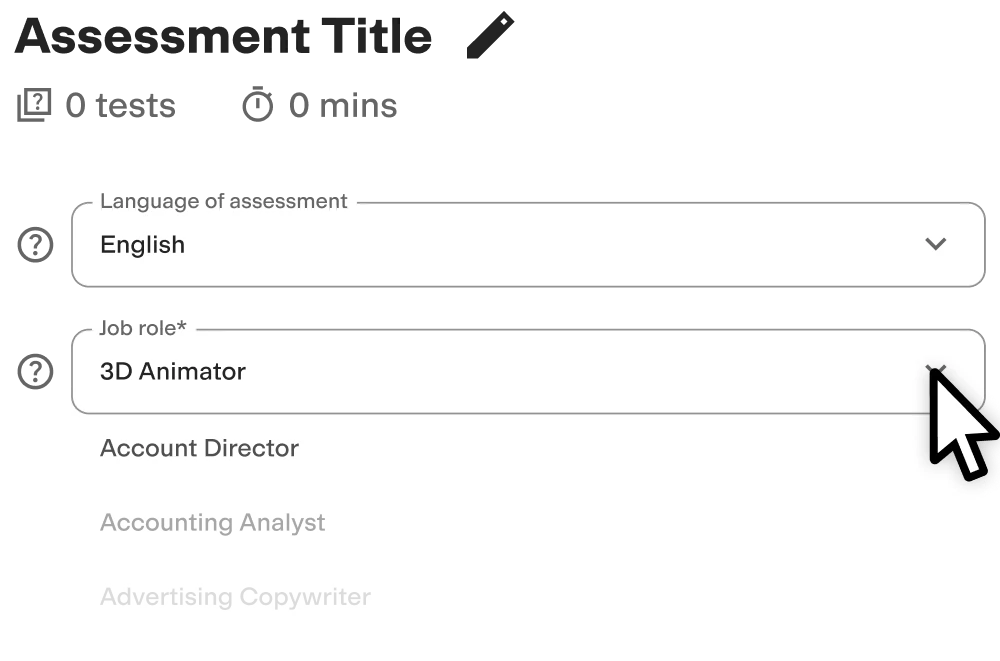
Create high-quality assessments, fast
Building assessments is a breeze with TestGorilla. Get started with these simple steps.

Why are problem solving skills important to employers?
Employers should use problem solving skills assessment tests because nearly every role benefits from staff with positive, troubleshooting mindsets.
Problem solving skills in the workplace mean that employees can respond quickly to challenges, creating processes that mitigate or remove obstacles that prevent the company from achieving its goals.
These challenges can be anything, for example:
Delays in your supply chain
Conflict between team members
Technological problems
Problem solving skills are especially important in roles such as project management, administrative assistance, and planning work with ever-changing circumstances and tight deadlines.
By asking candidates to pass a problem solving test online during the recruitment process, you ensure that all your recruits have what it takes to troubleshoot problems, improve your productivity, and increase your chances of innovation.
A problem solving skills test also ensures that you do this with minimal bias, using an objective numerical measure to establish the required skill set and build a shortlist.
You should also explore candidates’ approaches to creative problem solving in more depth with problem solving questions in the interview stage.
Key problem solving abilities to measure with a problem solving test
A strong problem resolution test evaluates candidates’ ability to define problems and analyze data and textual information to make decisions that best serve the business.
Some of the considerations for problem-solving test questions include:
Creating and adjusting schedules: Candidates should use a problem-solving process to understand what they can realistically achieve within time and how to adjust schedules to account for variable outcomes.
Interpreting data and applying logic to make decisions: Job seekers should have an aptitude for aligning data with business goals and making actionable decisions.
Prioritizing and applying order based on a given set of rules: Applicants can determine which project tasks take priority by using prioritization rules and supporting information.
Analyzing textual and numerical information to draw conclusions: Examining textual and numerical information to reveal patterns, relationships, and trends can help candidates draw accurate conclusions and pick the best choice from a selection of alternative solutions.

What job roles can you hire with our Problem Solving test?
You can – and should – use an ability test of problem solving skills when screening for most roles to reduce time-to-hire, even when hiring globally like Nexus HR.
However, it is especially important when hiring for positions where effective problem-solving is needed – for example, managerial roles, project-focused roles, and jobs where employees frequently work under time limits.
Here are some examples of roles you should use a problem solving assessment for:
Administrative assistants: Employees who can think on their feet can swiftly resolve logistical challenges, manage schedules, and facilitate seamless communication.
Project managers: Problem solving skills are essential to keep projects on track and ensure deadlines are met, even when unexpected changes occur.
Customer service managers: Customer service reps must make prompt decisions to respond to customer queries and solve their issues quickly.
Web developers: Great programmers have the competency to spot problems in their code and identify possible solutions.
Venture capitalists: Venture capitalists must be able to think critically and spot both opportunities and risks in potential investments – problem solving skills are key here.
Hospitality staff: Hotel and restaurant workers thrive when they can identify and effectively respond to customer issues, turning negatives into positive experiences.
Salespeople: Sales professionals benefit from the ability to transform client challenges and objections into opportunities for problem-solving, which often leads to upsells and cross-sells.

Create a multi-measure assessment: 4 tests to pair with the Problem Solving test
Of course, a problem solving test alone can’t tell you if a candidate has all the right skills for the role. Instead, include a problem solving skills test as part of a multi-measure psychometric assessment alongside up to four other essential skills tests to find the best candidates.
Here’s an example of four tests you might include to make a strong multi-measure assessment:
Communication test: Ensure your candidates maintain clear communication with teammates and direct reports, which is essential when discussing problems, brainstorming solutions, and implementing the chosen strategy
Time Management test: Dig deeper into jobseekers’ abilities to respond to time-pressured tasks and manage deadlines
Critical Thinking test: Identify prospects with the cognitive ability and logical reasoning to solve nuanced problems, stay objective, and balance complexities in their decision-making process
Big Five (OCEAN) Personality test: Get insight into what kind of worker a candidate is through five key metrics: openness, conscientiousness, extraversion, agreeableness, and emotional stability.
Note: We haven’t included any role-specific skills tests here because they depend on the position you’re hiring for. However, we highly recommend you add at least one in your five-test assessment to ensure your candidates possess the right skills for the job.
FAQs
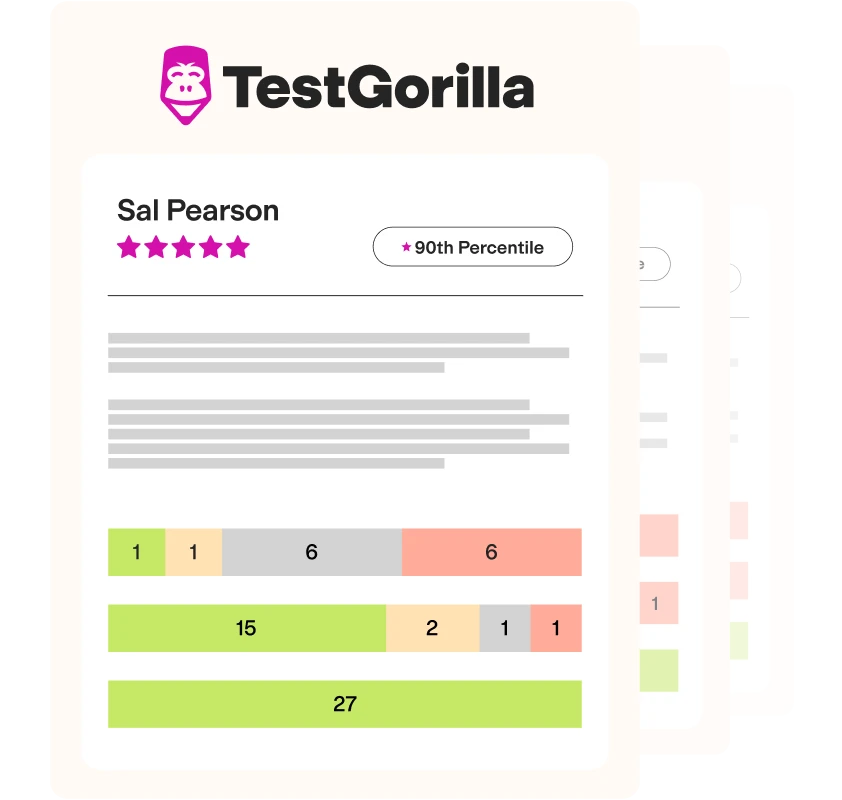
View a sample report
The Problem Solving test will be included in a PDF report along with the other tests from your assessment. You can easily download and share this report with colleagues and candidates.